| # | Title | Description | |
| 1 | Diagonals |
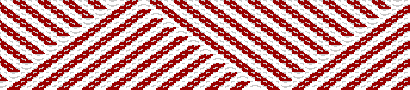 |
This pattern shows the basics of the Egyptian Diagonal. |
| 2 | Leaf |
 |
A golden leaf. |
| 3 | Diamonds |
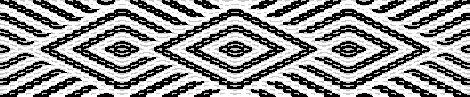 |
Three Diamonds |
| 4 | Diamonds |
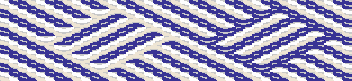 |
Diamonds of a different shape |
| 5 | River |
 |
This weaving was inspired by a pattern in "The Techniques of Tablet Weaving" by Peter Collingwood, 1996 (figure 88, page 106). |
| 6 | Snakes |
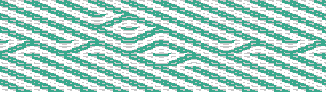 |
The river turned out to be a snake. Photo |
| 7 | Spiral, Meander |
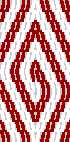 |
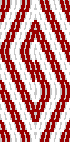
Peter Collingwood shows us how to weave these patterns ("The Techniques of Tablet Weaving", Fig. 89, page 107) |
| 8 | Spiral, Meander |
 |
Meander and two spirals with different background. |
| 9 | Long Line |
 |
Two colors are used here for the light line |
| 10 | Knot |
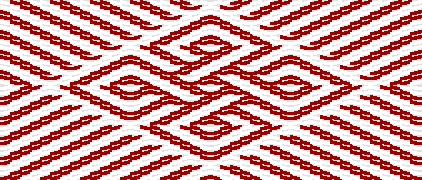 |
This knot pattern is typically woven using other threadings, dark - light - light - light, or the missed hole technique. |